Launch & Grow Your E-Gaming Business into India - The Easy Way
At Transact Bridge, we make it simple for global gaming companies to expand into India. From local payments collections (UPI, NetBanking, RuPay cards) to tax, legal, and compliance-consider it handled. No jargon. No red tape. Just smooth scaling.

Built for Global Gaming Brands Expanding into India
Transact Bridge is the trusted Merchant of Record solution designed for global online gaming and interactive entertainment companies entering the Indian market. Our platform doesn’t just process payments-it solves the real-world challenges of expansion into a high-growth but complex region. We manage end-to-end payment flows, help you stay compliant with Indian tax and foreign exchange laws, and offer localised support across banking, legal, and regulatory matters-so you can focus on your product, not paperwork.

Built for Global Gaming. Ready for India.
Transact Bridge powers your entry into the Indian market with streamlined payments, regulatory clarity, and full-stack support—so you can focus on scaling, not roadblocks.
 save
save
End-to-End Merchant of Record
We handle everything-from local compliance to transaction reconciliation-under one roof.
currency_rupee
Indian Payment Gateway
Enable fast, secure acceptance of Indian Rupees via UPI, net banking, and cards.
tenancy
Flexible Payment Routing
Smart routing ensures smoother checkouts, better conversions, and happier users.
fact_check
Regulatory & Tax Intelligence
Navigate India’s legal, tax, and compliance maze with expert-backed guidance.
What is Seller of Record?
Discover the Power of Transact Bridge's Comprehensive Solutions. Explore our Seller of Record Service Now!
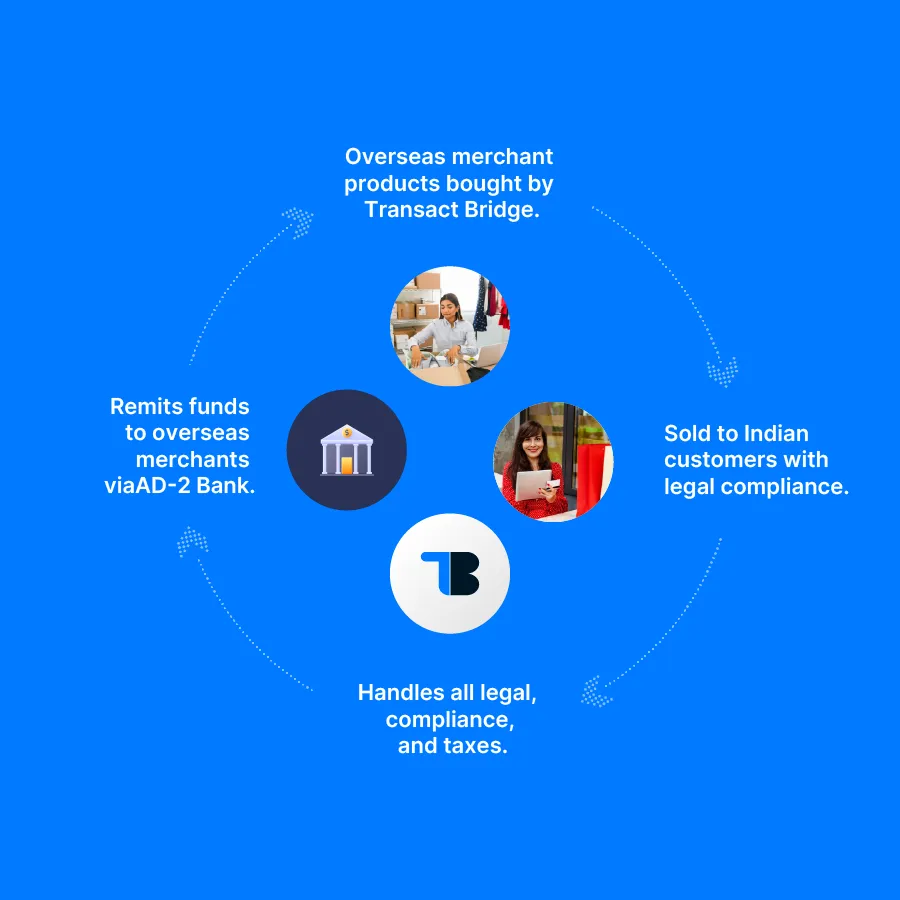
Seamless Market Entry for Global Gaming Brands
Expanding into India’s booming gaming market? Regulatory challenges, payment restrictions, and compliance hurdles can slow you down. Transact Bridge provides an end-to-end solution for gaming payments, legal compliance, and revenue optimization.
Fast & Compliant Onboarding
We act as your Merchant of Record, managing taxation, and regulatory approvals so you can focus on scaling.
Effortless Integration with Your Platform
Our developer-friendly APIs support real-money gaming, fantasy sports, esports, poker, rummy, casino platforms, and direct top-up/voucher merchants.
Secure Indian Payment Processing
Accept Indian payments via UPI, Netbanking, Credit Cards, and Digital Wallets—ensuring smooth transactions for: In-App Gaming Items, Themes, Game Vouchers & In game Direct Top-Ups
Legal & Regulatory Support for Gaming Businesses
Navigate gaming laws, foreign investment policies, licensing, and taxation with our expert legal advisory tailored for gaming platforms.
Scale Without Barriers
Expand your iGaming, skill-based gaming, and casino operations in India while we manage financial, operational, and compliance challenges.
Unlock Seamless Payments & Compliance for Your Gaming Business into India
Expanding into India’s booming gaming market Expanding into India’s booming gaming market comes with challenges—regulatory hurdles, complex tax structures, and restricted payment flows. Transact Bridge simplifies everything with a fully compliant, high-speed payment solution built for gaming brands.
Why Choose Transact Bridge?
One-Click Integration
Connect effortlessly with your platform to support direct top-ups, vouchers, in-app gaming items, and themes—all in Indian rupees.
Lightning-Fast Transactions
Process UPI, Net Banking, and Credit/Debit Card payments instantly, ensuring frictionless purchases for your players.
Regulatory Shield
Navigate India’s evolving gaming laws with ease while we handle tax compliance, KYC, and legal frameworks.
Powerful Analytics & Reporting
Track revenue trends, monitor transactions, and optimize user engagement with real-time insights.
Ironclad Security
Stay protected with state-of-the-art fraud prevention, chargeback management, and secure payment processing.
Expert Support
Whether it’s taxation, compliance, or technical integration, our team ensures your business runs smoothly.

Why Choose Our Services?
Transact Bridge stands out for its reliability, security, and efficiency. By partnering with us, you gain access to a trusted payment gateway that prioritizes user experience and data protection. Maximize your revenue potential and minimize payment-related headaches with Transact Bridge.
Grow Your Revenue with Transact Bridge
Ready to take your online gaming business to new heights? Join forces with Transact Bridge today and unlock a world of opportunities. Get started now and experience the difference our payment solutions can make for your business.
Frequently Asked Questions.
-
How does Transact Bridge support global gaming businesses into India?
Transact Bridge provides seamless, compliant, and secure payment solutions tailored for the gaming industry. We handle regulatory compliance, tax obligations, and payment processing, allowing gaming brands to focus on growth without legal hurdles.
-
What payment methods does Transact Bridge support?
We support a variety of payment options, including UPI, Net Banking, RuPay Credit/Debit Cards, Wallets, and Direct Vouchers. This ensures a frictionless checkout experience for Indian gamers.
-
Is there any setup fee for using Transact Bridge's services?
No, there are zero upfront costs to get started. We offer a simple, transaction-based pricing model with no hidden fees.
-
How long does it take to integrate Transact Bridge into my gaming platform?
Integration is fast and developer-friendly with our plug-and-play API. Most gaming brands integrate within 24–48 hours.
-
Does Transact Bridge provide legal and compliance assistance?
Yes! We ensure your gaming business complies with India’s regulatory frameworks, tax laws, and KYC requirements. Our legal experts keep you updated on policy changes to avoid penalties.
-
Are there transaction limits for accepting payments through Transact Bridge?
We offer customized transaction limits based on your business model and volume. Our scalable infrastructure supports high-value and microtransactions for in-game purchases.
-
Can I sell direct top-ups, in-app items, and gaming vouchers through Transact Bridge?
Absolutely! Transact Bridge enables gaming merchants to sell direct top-ups, vouchers, in-game items, themes, and digital content with instant payment settlements.
-
Is customer support available for technical issues or queries?
Yes! Our 24/7 expert support team is available via chat, email, and phone to assist with integrations, payments, and compliance-related queries.