Sell Digital Products Globally in India, USA & every market that matters
One Merchant of Record to accept payments, manage tax
compliance, and sell across India, the USA, and 100+ global markets.
Most digital businesses face the same barriers to global scale- failed local payments,
multi-jurisdiction tax obligations, and compliance complexity that delays every new market entry.
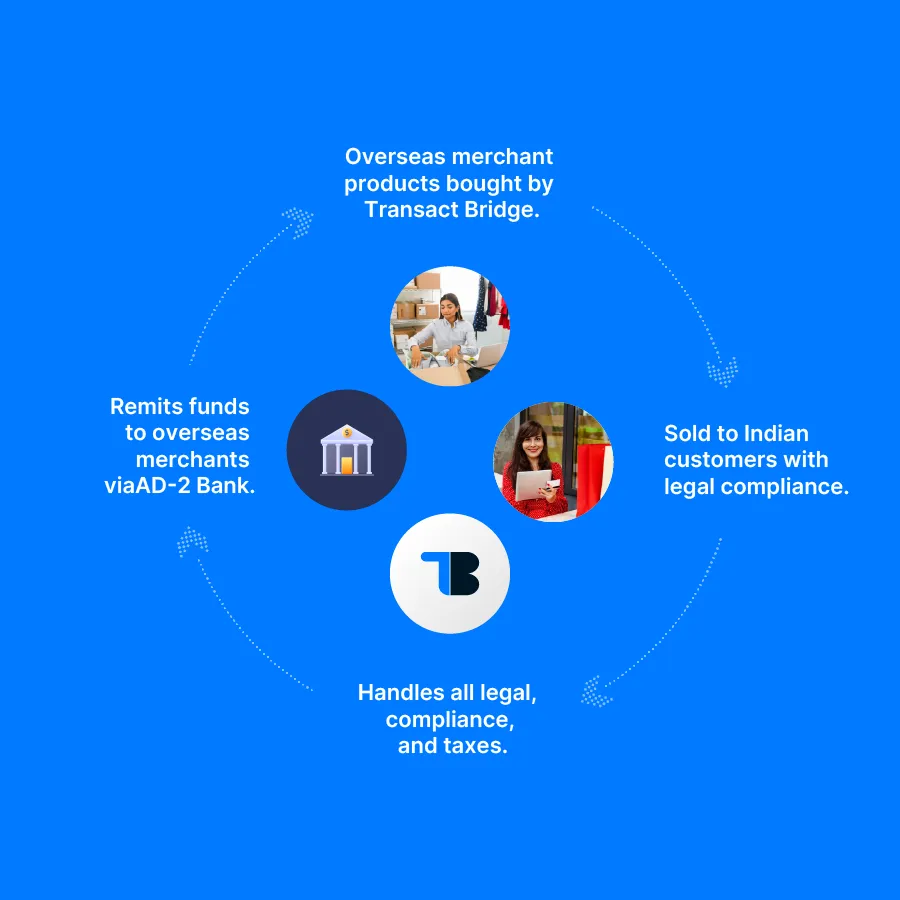
TransactBridge acts as the Merchant of Record, handling payments, tax compliance, and local
regulations across India, the USA, and global markets, so businesses launch faster, stay compliant,
and scale without setting up local entities

Scale Your Digital Product Sales Across India, USA & Global Markets
Selling globally shouldn't require multiple payment providers, local entities, tax registrations, or complex compliance processes. TransactBridge brings payments, tax compliance, and local payment methods together under one Merchant of Record infrastructure helping digital businesses sell across India, the USA, and global markets with less complexity and greater confidence.
What You Get
99.8% Payment Success Rate Globally
2x Conversion Uplift with Local Checkout
100% GST, Sales Tax & VAT Compliant Invoicing
Recurring Billing & Subscription Support
Real-Time Reporting Across All Markets
Trusted by 500+ Digital Businesses Worldwide
Why It Matters
From SaaS and software licenses to eBooks, online courses, music, and design assets — TransactBridge helps businesses sell digital products globally through a single Merchant of Record built for India, the USA, and worldwide markets.
Challenges We Solve for Digital Businesses Selling Across Global Markets
Every market comes with its own tax regime, payment preferences, and regulatory requirements. Here are the six barriers TransactBridge removes so digital businesses can expand across India, the USA, and global markets without slowing down.
Multi-Jurisdiction Tax Compliance
Managing GST in India, Sales Tax in the USA, and VAT globally creates audit risk and slows growth.
Revenue Leakage Through Cross-Border Fees
Poor FX rates and hidden cross-border charges quietly reduce profit margins for businesses expanding into global markets
Fragmented Payment Preferences Across Markets
Indian customers use UPI and RuPay. US customers prefer ACH and cards. Generic checkout loses conversions everywhere.
Slow Time to Market
Legal entity setup and compliance requirements in new markets can delay revenue realization by months.
Limited Financial Visibility Across Markets
Reconciling payments, tax records, and reports across multiple countries creates errors and blind spots.
Regulatory Risk Across Jurisdictions
Tax laws and digital commerce regulations change frequently across India, the USA, and global markets.
What is a Seller of Record?
When a business sells digital products globally, a Seller of Record manages payments, tax collection,
compliance, and financial liability in every market removing the need for local infrastructure.
As the
Merchant of Record (MoR) and Seller of
Record (SoR), TransactBridge manages all of this across India, the USA, and global markets enabling
businesses to sell globally from day one.
One platform. Global reach. Simplified expansion.
Some Frequently Asked Questions.
-
What is a Merchant of Record for digital products?
A Merchant of Record (MoR) is a legal entity that acts as the official seller in every transaction between a business and its customers. The MoR handles payment processing, tax collection and remittance, regulatory compliance, invoicing, chargebacks, and financial liability, all on the business's behalf. For companies selling digital products globally, a Merchant of Record eliminates the need for local entities, multi-jurisdiction tax registrations, and cross-border compliance management in every market.
-
Can businesses sell digital products in India, the USA, and global markets without setting up a local entity?
Yes. TransactBridge acts as the Merchant of Record, handling payments, tax compliance, and regulatory requirements across India, the USA, and 100+ global markets, so businesses can sell digital products globally without establishing a local company, tax registration, or payment infrastructure in every country they enter.
-
What is the difference between a Merchant of Record and a payment gateway?
A payment gateway processes transactions but leaves all tax obligations, compliance, chargebacks, and regulatory liability with the seller. A Merchant of Record goes further, it becomes the legal seller of record, handling payment processing, GST, Sales Tax, VAT collection and remittance, chargebacks, fraud management, and full regulatory compliance across every market. Businesses that sell digital products globally use a Merchant of Record to avoid the compliance burden a payment gateway does not cover.
-
What payment methods does TransactBridge support for global digital product sales?
TransactBridge supports local and global payment methods across every key market. In India: UPI, RuPay, Paytm, net banking, and credit and debit cards. In the USA: ACH transfers, major credit and debit cards, and digital wallets. Globally: 30+ local payment methods across major markets, all accessible through a single integration, with localized checkout optimized for each market.
-
How does GST compliance work when selling digital products in India?
Under Indian GST law, digital products sold to Indian customers are subject to GST. When TransactBridge acts as the Merchant of Record, it manages GST calculation, invoicing, and remittance on the business's behalf, keeping every sale fully compliant and audit-ready without requiring the seller to register for GST in India independently.
-
Does TransactBridge support SaaS subscriptions and recurring billing for global markets?
Yes. TransactBridge supports subscription billing, recurring payments, renewals, and automated billing workflows across India, the USA, and global markets. This covers SaaS businesses, membership platforms, online courses, digital content providers, and any business model requiring recurring revenue, with full tax compliance and local payment method support built into every billing cycle.
-
How does TransactBridge help businesses sell digital products globally?
TransactBridge acts as the Merchant of Record for businesses selling digital products globally, handling payments, GST, Sales Tax and VAT compliance, invoicing, recurring billing, multi-currency settlements, chargeback management, and regulatory requirements across India, the USA, and 100+ global markets. The platform enables rapid market entry, supports local payment methods in every market, and handles all compliance so businesses scale internationally without building local infrastructure.