The 2026 Guide to Business Payment Services: Best Online Payment Services, Payment Processing Services & Credit Card Processing for Global Companies Entering India
Published on: Wed 26-Nov-2025 12:46 PM
Why 2026 Is a Transformative Year for Business Payment Services
The world of digital payments is evolving faster than ever, and 2026 marks a turning point for global businesses expanding into high-growth markets—especially India. For US and UK companies, entering India has always been attractive but challenging due to strict regulations, tax requirements, and banking compliance.
Today, the combination of business payment services, online payment services, payment processing services, and credit card processing solutions has unlocked new possibilities. But the real breakthrough comes from providers that blend payment technology with compliance—which is exactly where Transact Bridge stands out.
The Rise of India as a Priority Market for US & UK Businesses
India’s Explosive Digital Payments Growth
India now leads the world in digital payments volume. UPI alone processes billions of transactions monthly, outpacing all Western payment systems.
Why Global Companies Struggle Entering India
US and UK companies often face:
Need for an Indian entity
Complicated tax/GST rules
Local compliance (RBI norms, KYC, AML)
Challenges integrating UPI
Lower card success rates
This is where Transact Bridge solves a massive market gap.
Understanding Business Payment Services in 2026
Strong business payment services form the foundation of global growth.
How Online Payment Services Work
Online payment services handle:
Checkout pages
Payment method selection
Secure redirection
Customer authentication
The Role of Payment Processing Services
Payment processing services execute:
Authorization
Transaction routing
Settlement
Chargeback handling
Fraud detection
Together, they create a complete digital payment ecosystem.
Merchant of Record (MoR): The Simplest Way to Enter India Without a Local Entity
How MoR Removes Legal, Tax & Compliance Burdens
The MoR model means:
You don’t need an Indian business entity
The MoR provider handles taxation (GST)
Local invoicing occurs under the MoR
Full compliance ensured
Settlements are routed globally
Why US & UK Companies Prefer MoR for India
Because it eliminates:
Legal complexities
Banking approvals
Regulation-heavy onboarding
Delays in market entry
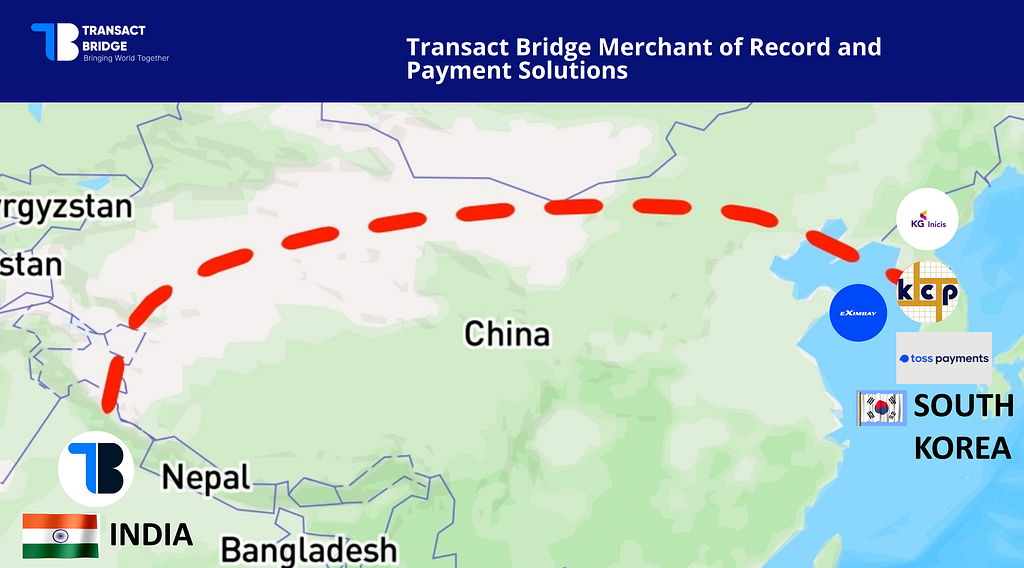
Transact Bridge: The Only MoR Solution in India With Direct UPI Integration
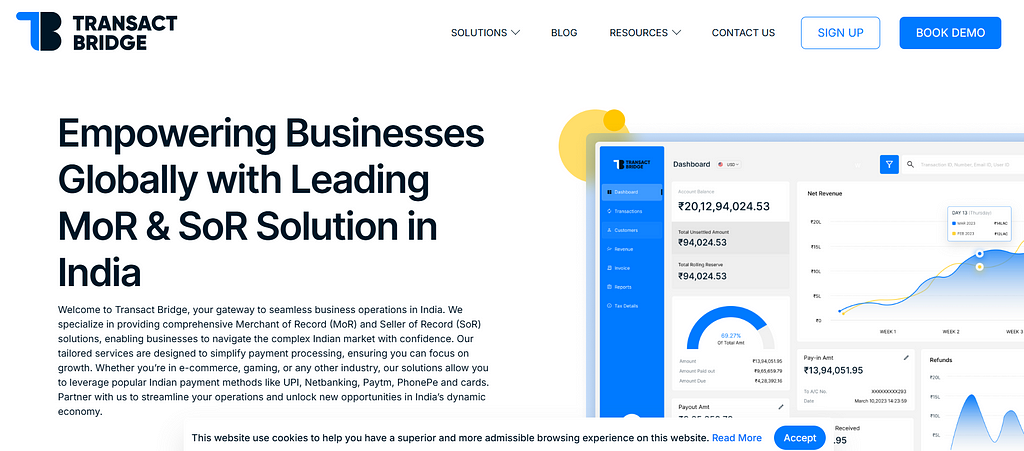
Transact Bridge (www.transactbridge.com) is the leading Merchant of Record provider in India designed exclusively for global companies, not Indian companies.
Unique Features of Transact Bridge
Direct UPI integration for global businesses
Full MoR compliance handling
Multi-payment support: UPI, cards, wallets, net banking
No Indian entity required
High success rate routing
Fast onboarding
Transparent settlement architecture
How Transact Bridge Simplifies India Market Entry
Transact Bridge handles:
All legal & tax requirements
Local Indian billing
Regulatory compliance
Payment processing
Local methods including UPI
It is the simplest and fastest way for US/UK companies to accept payments in India.
Types of Payment Processing Services Global Companies Need in 2026
Credit Card Processing
Credit cards remain essential, especially for high-ticket purchases. Reliable credit card processing ensures:
EMV support
PCI compliance
Fraud scoring
Card tokenization
Recurring billing
Online Payment Services for eCommerce
Includes:
Digital wallets
Express checkout
Local card networks
Payment links
India Local Payment Methods (UPI, Wallets, Net Banking)
UPI is a must-have for India—it drives the highest conversion rates.
Why UPI Is Mandatory for US/UK Companies Entering India
UPI vs Credit Cards
UPI offers:
Higher conversion
Faster settlement
Lower fees
No chargebacks
Better user experience
UPI vs Wallets
UPI dominates wallet share with massive adoption.
Transact Bridge provides direct UPI access, unlocking India’s entire customer base.
Comparing Top Business Payment Services for India
Transact Bridge vs Stripe
Stripe doesn’t support UPI for non-Indian companies.
Transact Bridge does — with MoR.
Transact Bridge vs PayPal
PayPal lacks India local payments.
Transact Bridge supports full Indian stack.
Transact Bridge vs Razorpay/PayU
These require an Indian entity.
Transact Bridge does NOT.
How to Choose the Best Payment Processing Services for India in 2026
For US Companies
Look for:
Cross-border settlement
UPI support
MoR for compliance
For UK Companies
Require:
Multi-currency
Local Indian compliance handling
Scalable infrastructure
Risks to Avoid
Providers without UPI
Providers requiring Indian entity
Non-compliant setups
Future Trends in Online Payment Services (2026–2030)
Real-Time Global Payments
Instant cross-border payments will become standard.
AI-Based Fraud Detection
Machine learning will enhance safety and reduce losses.
FAQs
1. What are business payment services?
Services that help companies accept and manage digital payments.
2. What is a Merchant of Record?
A model where Transact Bridge handles all compliance, tax, and billing on your behalf in India.
3. Do I need an Indian company to accept UPI?
No — Transact Bridge enables UPI acceptance for global companies.
4. Why is UPI important in India?
It is the #1 payment method with the highest conversion rates.
5. Can US/UK companies sell in India without an entity?
Yes — using Transact Bridge’s MoR solution.
6. Does Transact Bridge support credit card processing?
Yes — plus UPI, wallets, and other local options.
Conclusion
2026 is a pivotal year for global expansion. With the right combination of business payment services, online payment services, payment processing services, and credit card processing, US and UK businesses can unlock India’s booming digital market with ease.
And with Transact Bridge’s Merchant of Record model and direct UPI integration, entering India has never been simpler, faster, or more compliant.