
Why Invoicing, Billing, and Tax Compliance Are the Real Backbone of Global Payments
Published on: Wed 11-Feb-2026 12:46 PM
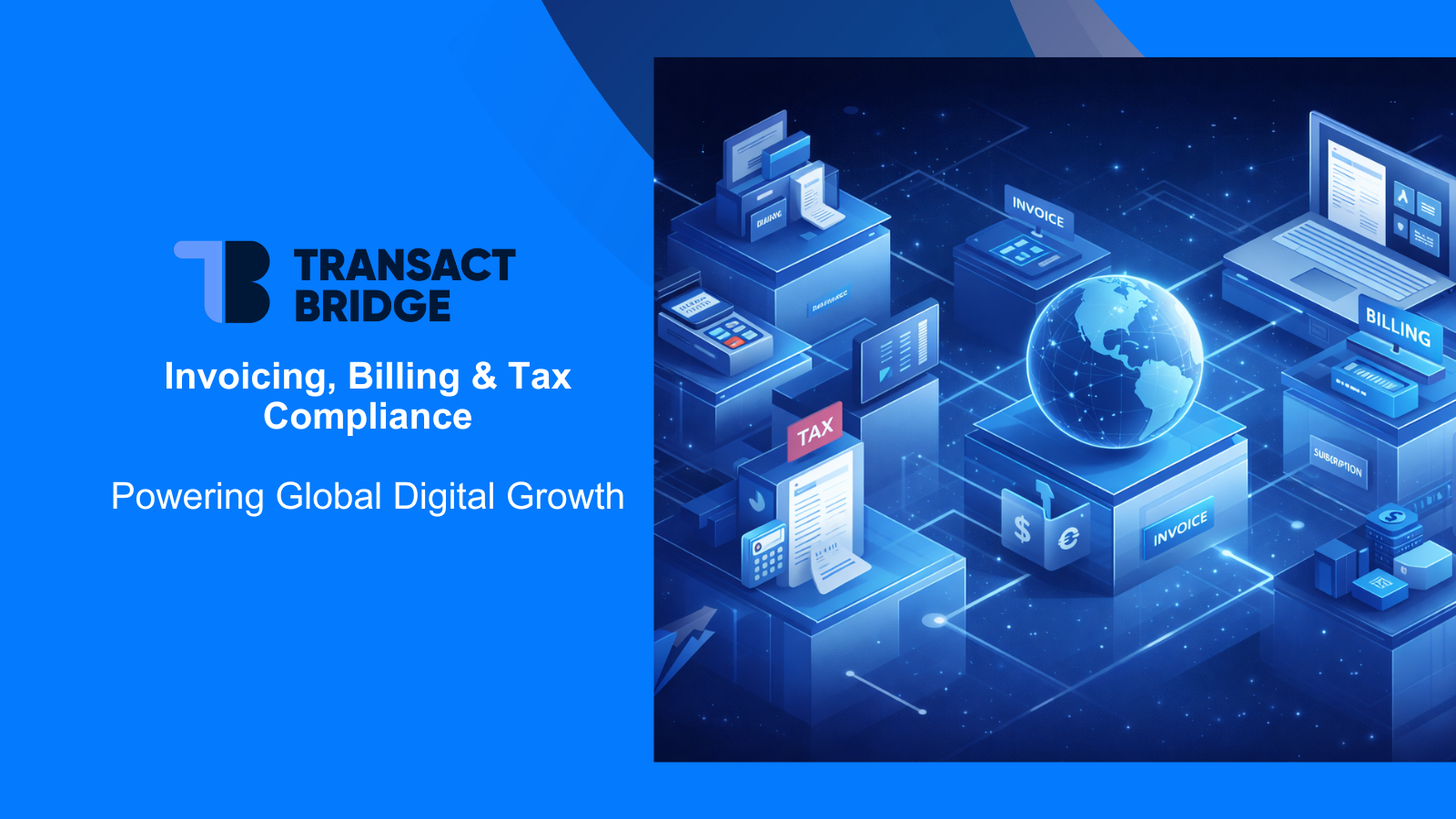
When companies expand globally, the first question is usually:
“How do we accept payments?”
But that’s rarely the real challenge.
The real complexity begins after the payment is captured.
How do you issue compliant invoices across jurisdictions?
How do you manage recurring billing across currencies?
How do you calculate and remit taxes correctly in multiple regions?
How do you stay compliant without building entities everywhere?
This is where most global growth strategies slow down.
Payments are visible.
Invoicing, billing, and tax compliance are invisible — but far more critical.
The Myth: Payments Equal Expansion
Many digital businesses assume that integrating a global payment gateway is enough to operate internationally.
In reality, payment processing is just one layer of the revenue lifecycle.
A compliant cross-border transaction requires:
Payment authorization
Currency handling
Legal invoice issuance
Local tax calculation
Tax collection and remittance
Regulatory reporting
Reconciliation and audit support
If even one of these layers is misaligned, operational risk increases.
Invoicing: More Than a Receipt
An invoice is not just a document confirming a sale.
In many jurisdictions, it is a legal instrument.
Proper invoicing must include:
Correct tax rates (VAT, GST, sales tax)
Registered business identifiers
Jurisdiction-compliant formatting
Timestamp and transaction references
Accurate currency declaration
Failure to comply can result in audits, penalties, or delayed settlements.
For subscription-based businesses, invoicing becomes even more complex. Every renewal, upgrade, downgrade, or cancellation must generate accurate documentation.
At scale, manual processes simply do not work.
Billing in a Multi-Currency, Multi-Region World
Modern digital businesses operate on:
Subscription billing
Usage-based billing
Tiered pricing
Hybrid models
Now add:
Multiple currencies
Regional tax differences
Local payment methods
Failed payment retries
Refund flows
Billing becomes infrastructure — not software.
Without centralized control, businesses face:
Revenue leakage
Inconsistent reporting
Disputed charges
Operational bottlenecks
Billing systems must integrate tightly with payments and compliance frameworks.
Tax Compliance: The Most Underestimated Risk
Tax exposure is where international expansion often becomes complicated.
Each country has its own requirements:
VAT or GST registration thresholds
Digital services tax rules
Cross-border reporting obligations
Reverse charge mechanisms
Withholding regulations
Managing this internally means building local expertise in every market.
That approach rarely scales efficiently.
This is why the Merchant of Record model has gained global traction.
The Role of a Global Merchant of Record
A Merchant of Record (MoR) becomes the legal seller of record in each jurisdiction.
That means the MoR:
Accepts payments
Issues compliant invoices
Calculates and collects taxes
Remits taxes to authorities
Handles disputes and refunds
Maintains regulatory compliance
Instead of creating separate legal entities, businesses operate through structured infrastructure.
This reduces risk while accelerating market entry.
How Transact Bridge Connects Payments with Compliance
Transact Bridge operates as a global Merchant of Record platform combining:
Global Payment Solutions
Transact Bridge enables businesses to accept:
Local payment methods
Real-time payment rails
Cards and wallets
Multi-currency transactions
Payment acceptance is optimized for higher authorization rates and regional preference alignment.
Compliant Invoicing Across Markets
Invoices are generated in alignment with:
Local tax requirements
VAT/GST regulations
Jurisdiction-specific compliance standards
This ensures audit readiness and regulatory accuracy.
Automated Billing Infrastructure
Transact Bridge supports:
Recurring subscription billing
Usage-based billing models
Automated renewals
Smart payment retries
Revenue reconciliation
Billing becomes structured and scalable.
End-to-End Tax & Compliance Management
Transact Bridge handles:
Tax calculation
Collection and remittance
Compliance monitoring
Reporting requirements
This allows businesses to focus on growth without absorbing cross-border regulatory complexity internally.
Why Unified Infrastructure Matters
Many companies try to combine:
One payment processor
One billing platform
A separate tax engine
External compliance consultants
Over time, fragmentation leads to:
Data inconsistencies
Reporting errors
Compliance exposure
Operational inefficiencies
Payments, invoicing, billing, and tax compliance are interconnected systems.
They must operate as one architecture.
The Strategic Advantage
Companies that implement structured revenue infrastructure early benefit from:
Faster global expansion
Reduced compliance risk
Clean financial reporting
Improved operational efficiency
Stronger investor confidence
Companies that treat compliance as an afterthought often pay for it later.
Final Thoughts
Global growth is no longer about simply accepting payments.
It is about building scalable revenue infrastructure that integrates:
Payments
Invoicing
Billing
Tax compliance
As digital commerce expands across borders, the companies that succeed will be those that treat compliance and billing architecture as foundational — not optional.
Transact Bridge provides this unified infrastructure as a global Merchant of Record, enabling businesses to scale confidently without replicating complexity in every market.
Because sustainable global growth isn’t just about collecting revenue.
It’s about structuring it correctly.


