How Global Businesses Can Sell Digital Products in India: 7 Powerful Strategies Beyond ACH vs Card Payments (2026 Guide)
Published on: Mon 20-Apr-2026 02:41 PM
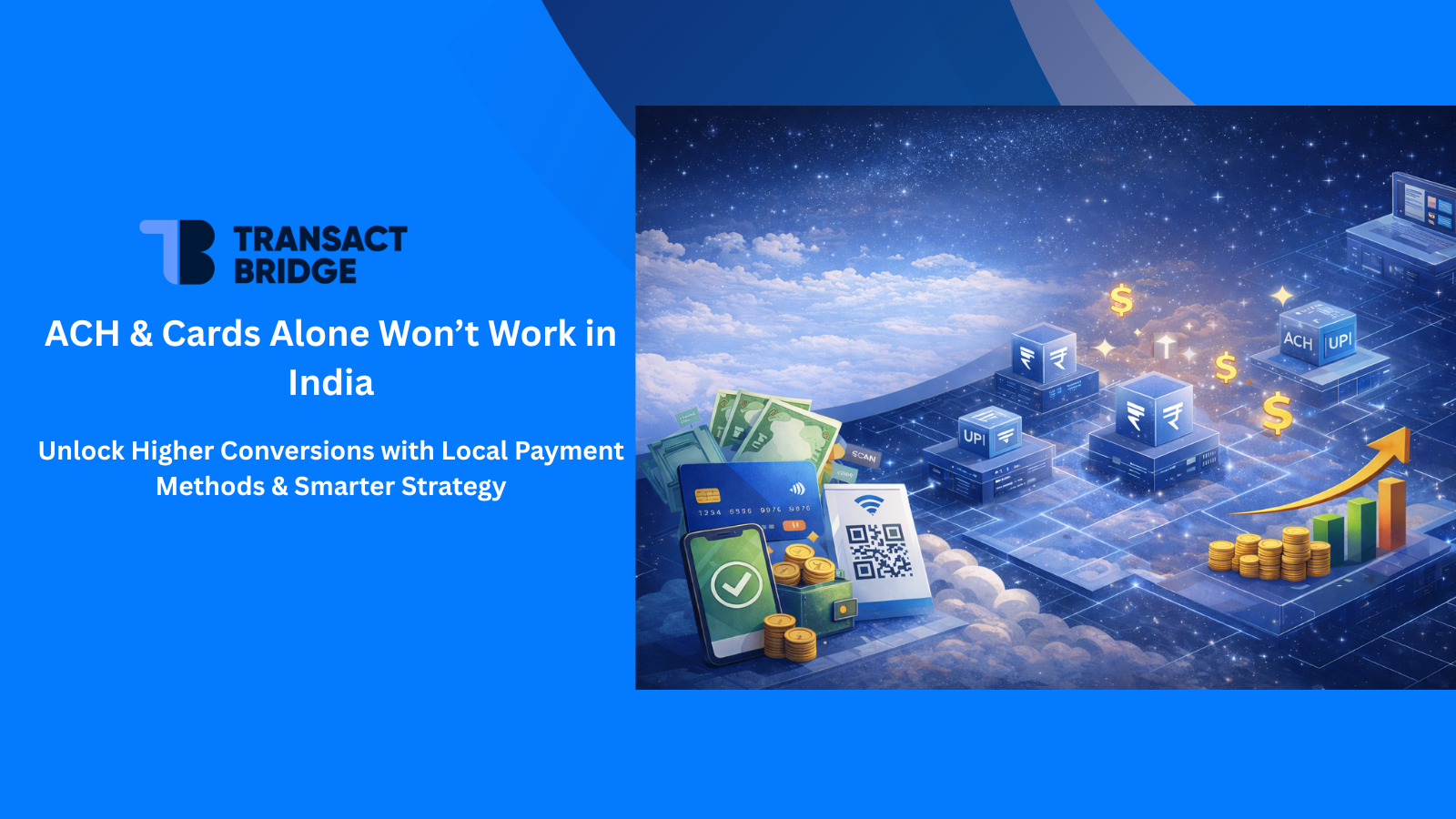
Expanding into India is no longer optional for global businesses, it’s a growth necessity. With a booming digital economy and hundreds of millions of online users, India offers unmatched potential for companies selling SaaS, digital content, live streaming, and e-commerce products.
However, many U.S. and global companies struggle when entering this market. A key reason is relying solely on traditional payment systems like ACH and card payments. While these methods dominate in Western markets, they fall short in India.
This guide explains how global businesses can sell digital products in India effectively by going beyond ACH vs card payments and adopting localized strategies that increase conversions, ensure compliance, and deliver seamless customer experiences.
Understanding ACH vs Card Payments in a Global Context
What Are ACH Payments and Their Limitations
ACH (Automated Clearing House) payments are widely used in the United States for bank-to-bank transfers. They are cost-effective and ideal for recurring billing, making them popular among SaaS and subscription businesses.
However, ACH payments are limited geographically. They are not designed for international use, especially in markets like India where banking infrastructure and payment preferences differ significantly.
For global businesses, relying on ACH payments alone creates a major barrier when trying to accept payments from Indian customers.
How Card Payments Work Globally
Card payments - credit and debit - are accepted worldwide and offer instant transaction processing. They are widely used for online purchases, subscriptions, and digital services.
Despite their global reach, card payments come with drawbacks:
Higher transaction fees
Increased chargeback risks
Lower adoption in certain markets like India
In India, while cards are used, they are not the dominant payment method for everyday transactions.
ACH vs Card Payments – Key Differences
Feature | ACH Payments | Card Payments |
Cost | Low | High |
Speed | 1–3 days | Instant |
Global Reach | Limited | High |
Risk | Low | High (chargebacks) |
Understanding these differences is crucial—but more importantly, recognizing their limitations in India is key to success.
Why India Requires a Different Payment Strategy
The Rise of Alternative Payment Methods
India’s digital ecosystem is unique. Consumers prefer fast, mobile-first payment methods that are deeply integrated into daily life.
Popular payment options include:
UPI (Unified Payments Interface)
Mobile wallets
Net banking
These methods offer instant payments and are trusted by millions of users.
Consumer Behavior in India
Indian customers prioritize:
Convenience
Speed
Familiarity
If your checkout process does not include local payment methods, users are likely to abandon their purchase.
Regulatory and Compliance Requirements
India has strict financial regulations, including:
Data localization rules
Recurring payment mandates
RBI compliance requirements
Failing to meet these standards can result in transaction failures or legal complications.
Challenges Global Businesses Face When Entering India
Payment Acceptance Barriers
Without local payment options, businesses struggle to complete transactions.
Currency and Pricing Issues
Displaying prices in foreign currencies reduces trust and conversion rates.
Technical Integration Complexity
Integrating multiple payment systems can be time-consuming and costly.
How Transact Bridge Enables Seamless Entry into India
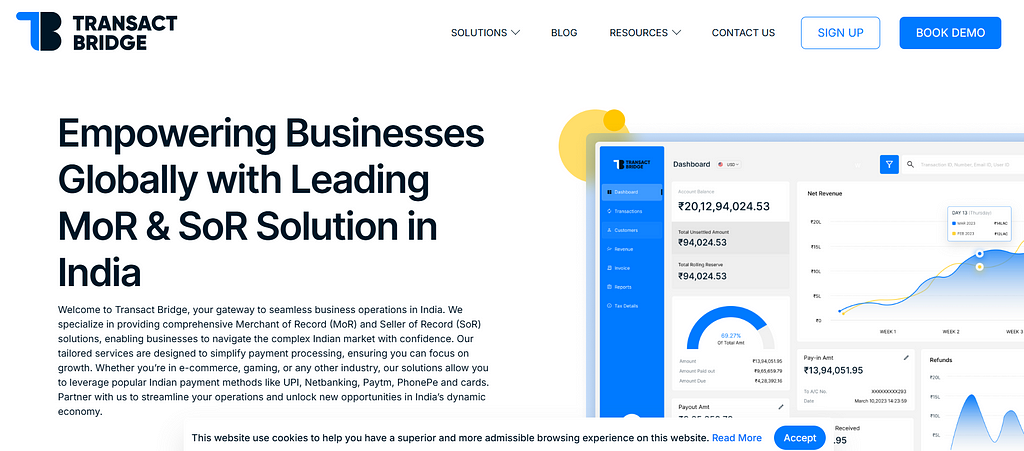
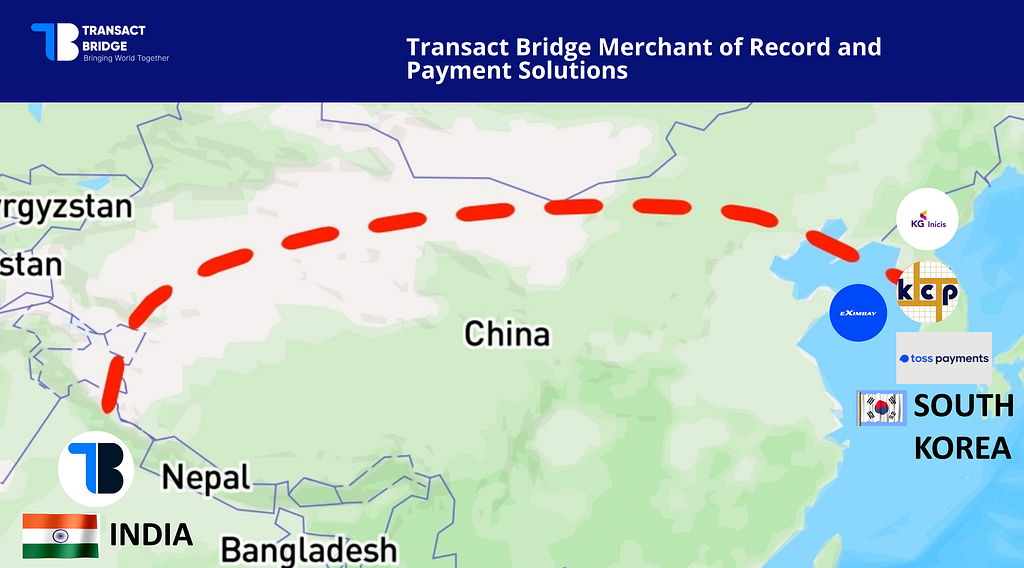
Transact Bridge provides a complete solution for global businesses looking to sell in India.
Local Payment Integration
Accept payments through UPI, wallets, cards, and net banking.
Compliance Management
Automatically handle regulatory requirements, reducing risk.
Localized Checkout Experience
Display prices in INR and offer familiar payment options.
Support for Digital and Streaming Products
Optimize payment flows for subscriptions, live streaming, and digital content.
Best Payment Methods for Selling Digital Products in India
UPI - The Dominant Payment Method
UPI is the most widely used payment system in India, offering:
Instant transactions
High security
Mobile-first experience
Cards – Still Relevant but Secondary
Cards are useful for international transactions but are not the primary choice for most users.
Wallets and Net Banking
These methods provide additional flexibility and cater to diverse user preferences.
ACH vs Card Payments vs Indian Payment Methods
Feature | ACH | Cards | Indian Methods |
Availability | US Only | Global | India |
Speed | Medium | Fast | Instant |
Conversion Rate in India | Low | Medium | High |
User Preference | Low | Medium | Very High |
This comparison highlights why localization is critical.
Conclusion: Winning the Indian Market with the Right Strategy
Entering India requires more than just enabling payments—it demands a localized approach that aligns with consumer behavior and regulatory requirements.
While ACH vs card payments are important concepts, they are only part of the equation. To truly succeed, global businesses must adopt local payment methods, optimize user experience, and ensure compliance.
By leveraging solutions like TransactBridge, companies can unlock the full potential of the Indian market and scale their digital products globally.
Frequently Asked Questions (FAQs)
Can ACH payments be used in India?
No, ACH payments are limited to the United States and are not supported in India.
What is the best payment method for India?
UPI is the most preferred payment method due to its speed and convenience.
Are card payments enough for Indian customers?
No, relying only on card payments can reduce conversion rates significantly.
How can global businesses accept payments in India?
By using platforms like TransactBridge that provide localized payment solutions.
Why is India important for digital product businesses?
India offers a rapidly growing user base and increasing demand for digital services.
What are the biggest challenges in cross-border payments?
Compliance, currency conversion, and adapting to local payment preferences.