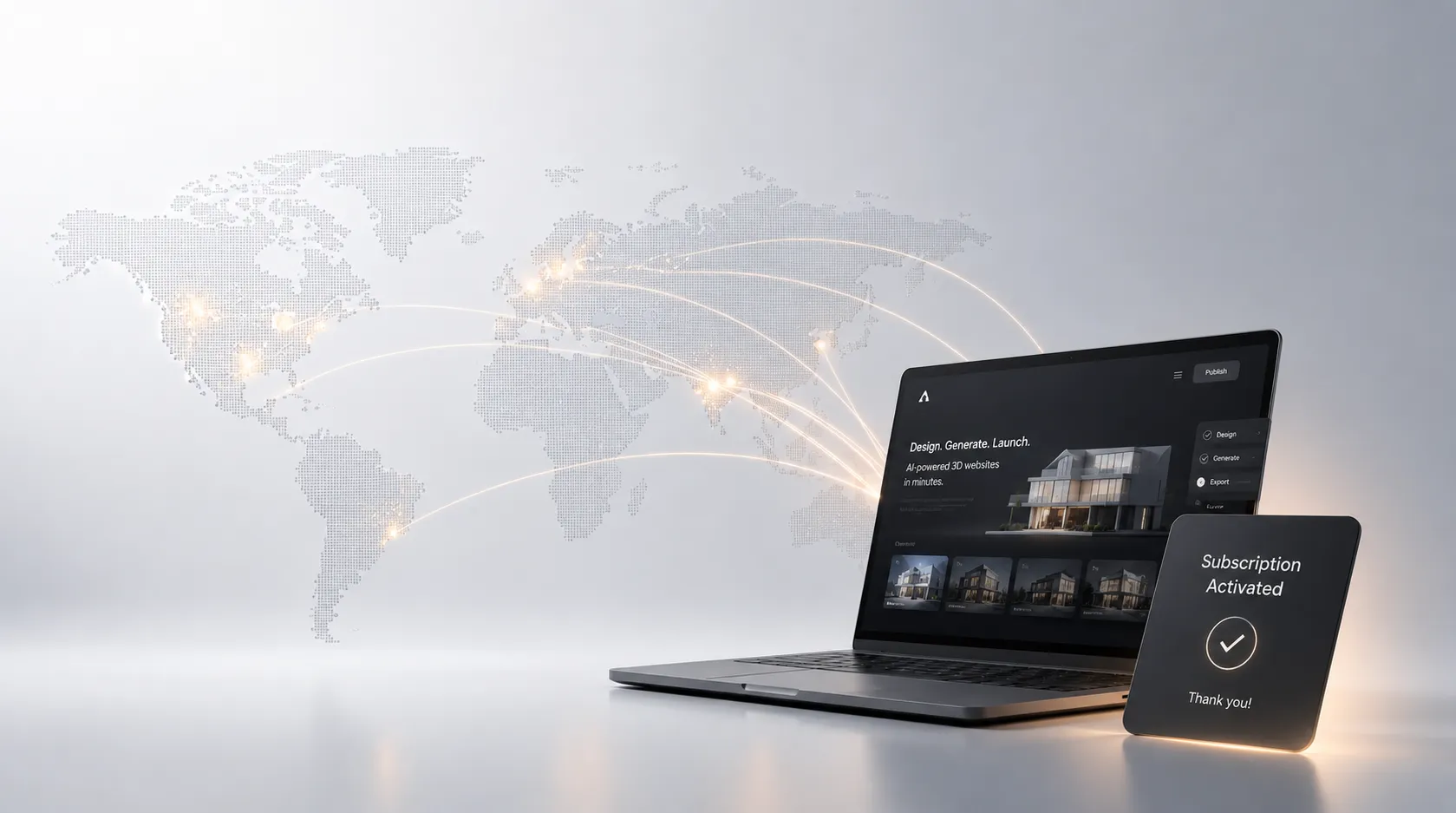
Ninety Countries Showed Up. The Checkout Didn't.
A Bangalore-based language learning startup had built something the market was missing: a platform to learn Indian languages like Tamil, Telugu, Kannada, and Sanskrit through interactive lessons and AI-powered speaking practice.
What started as a side project grew fast:
- Users across 90+ countries within months of launch
- Viral community growth, including one of the top posts ever in a major language subreddit
- Strong demand signals from India, the US, UK, Singapore, France, and beyond
But despite this traction, the team had no reliable way to collect payments from anywhere.
Transact Bridge helped the platform go from zero payment infrastructure to a fully functioning global subscription business, handling both international payments and India-first methods under one roof.
The Payment Problem They Couldn't Ignore
Global demand showed up before the infrastructure was ready.
When monetisation began, the assumption was that most paying users would come from India. The opposite happened.
Before UPI was enabled, the majority of paying users were coming from outside India, the US, UK, France, Singapore, Denmark. A user from France even reached out directly asking why the app was still free.
The options on the table didn't fit:
- The most obvious India-first gateway only accepted payments from Indian customers
- Stripe wasn't available for their setup
- Other alternatives lacked the right combination of global reach, recurring billing, and UPI support
The result: real demand, no reliable way to capture it.
What Was Breaking the Funnel
The issue wasn't interest. It was infrastructure.
- No global payment support for international users trying to subscribe
- No UPI, despite it being the dominant payment method in India
- No recurring billing system built for cross-border subscriptions
- Tax and compliance obligations across multiple jurisdictions with no automated solution
- A founding team stretched thin, unable to build payment infrastructure while also building product
The Shift: One Integration for the Whole World
The founder had already heard about Transact Bridge through startup community conversations around global payments for Indian builders. When it came time to evaluate seriously, it was the only platform that solved both sides of the problem.
Instead of stitching together multiple providers or building compliance infrastructure from scratch, the platform partnered with Transact Bridge as its Merchant of Record.
This allowed them to go live fast with the first test payment processed in a single night.
Transact Bridge became responsible for:
- Global payment collection across 150+ countries
- UPI support for Indian users paying in INR
- Tax collection and remittance across jurisdictions, automatically
- Recurring subscriptions and billing infrastructure
- Self-service subscription management
- Reliable webhooks and developer-friendly APIs
All while the team retained full control over product, pricing, and user experience.
What Changed on the Ground
Post integration, both sides of the market opened up simultaneously.
- International users could finally pay: subscribers from the US, UK, Singapore, France, Malaysia, and Denmark converted without friction
- Indian users got UPI: once live, Indian users who had struggled with international card flows could pay in INR through familiar methods; adoption was immediate
- India became the #1 paying market: a market that had been largely locked out became the platform's largest paying geography
- Subscriptions ran reliably: recurring billing, webhooks, and subscription logic worked from the first version and required virtually no changes even after a major backend migration from Flask to FastAPI
- Tax and compliance disappeared as a concern: remittance across jurisdictions was handled automatically, with Transact Bridge's team directly supporting the founder and their CA on reporting questions
The Outcome: From No Revenue Infrastructure to a Global Subscription Business
The impact was structural, not just numerical.
- Paying users across 90+ countries
- India went from locked out to the #1 paying market after UPI went live
- International markets including the US, UK, Singapore, France, Malaysia, and Denmark converted reliably
- Tax and compliance across all jurisdictions handled automatically, with zero additional overhead
- Payment infrastructure remained stable through a full backend migration, no rework required
- The founding team stayed focused entirely on product
Most importantly: a platform that had demand everywhere but couldn't collect payments anywhere became a fully functioning global subscription business, without building a payments team or compliance function.
What Made It Work
The team didn't need to:
- Integrate multiple payment providers for different geographies
- Build recurring billing infrastructure from scratch
- Manage international tax obligations manually
- Revisit payment code after every product change
Instead, a single integration handled everything , India and the world, subscriptions and compliance, webhooks and reporting.>
Founder, Language Learning Platform.
"I have not touched the code related to my webhooks or most of my payment stuff since probably the first version that we implemented. Stuff works the way it is supposed to."
The infrastructure scaled quietly in the background. The team scaled the product.
Foot note:
Language learning was never a payments problem.
It was an infrastructure problem.
Once the rails were in place, the world could finally pay.
The demand was always there - across 90 countries, in dozens of languages.
The only thing missing was the infrastructure to capture it.
Once that was in place, everything followed.