
Chargeback Management and Dispute Resolution: A Complete Guide for Merchants
Published on: Thu 28-May-2026 11:25 AM
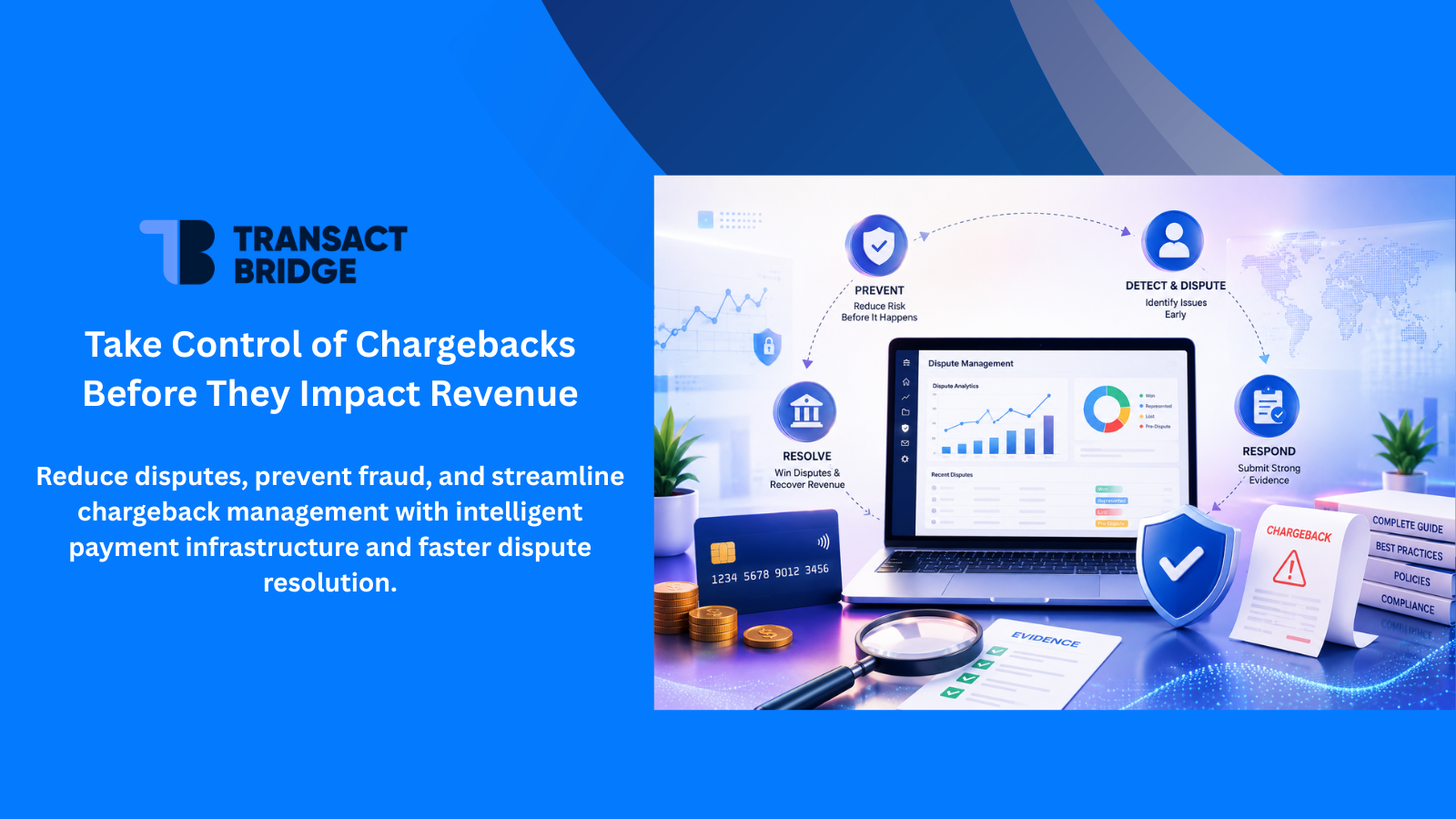
Chargebacks were designed as a consumer protection mechanism. Today, they have become one of the most expensive operational challenges a merchant can face and the problem is accelerating.
Global chargeback volumes are projected to reach 337 million transactions annually by 2026, up from 615 million dispute cases already processed across card networks each year.
For every $1 lost to a chargeback or fraud-related dispute, merchants actually lose up to $3.75 once fees, operational overhead, and lost merchandise are factored in, according to the LexisNexis True Cost of Fraud Study. In ecommerce alone, chargeback related losses exceeded $117 billion globally in 2023.
The merchants who navigate this environment successfully are not the ones who fight every dispute. They are the ones who have built a structured approach to chargeback management; one that combines prevention, intelligent response, and the right payment infrastructure.
This guide covers everything: what chargebacks are, how the process works, why they happen, what they really cost, and how to reduce them strategically.
What Is a Chargeback?
A chargeback is a forced reversal of a payment transaction, initiated by a cardholder's issuing bank; not by the merchant and not through a merchant's own returns process.
A credit card chargeback occurs when a cardholder disputes a transaction with their bank rather than resolving it directly with the merchant. The bank investigates the claim and, if it decides in the cardholder's favour, reverses the payment directly from the merchant's account.
In plain terms: A chargeback bypasses the merchant entirely. The money leaves your account before you have had a chance to respond and you have a narrow window to get it back.
The chargeback mechanism was created in the 1970s under the US Fair Credit Billing Act to protect consumers from genuine fraud and merchant misconduct. The intent was legitimate. The reality today is that the system is routinely misused; a problem the industry now calls friendly fraud.
How Chargebacks Work in India: The NPCI Framework
In India, the chargeback ecosystem operates under a parallel but distinct structure governed by the National Payments Corporation of India (NPCI). It is the umbrella body that oversees domestic retail payment systems including RuPay, UPI, IMPS, and NACH.
For RuPay card transactions, chargebacks are processed through NPCI's RuPay Global Clearing and Settlement System (RGCS), which functions as the Indian equivalent of Visa and Mastercard's dispute networks. The core mechanism is broadly similar — a cardholder disputes a transaction, the issuing bank raises a chargeback, and the acquiring bank representing the merchant must respond within a defined window — but the timelines, reason codes, and escalation rules follow NPCI's own operating guidelines rather than international network rules.
A few features of the Indian chargeback landscape are worth understanding:
Dual network exposure: Many Indian merchants process transactions across both domestic RuPay infrastructure and international networks (Visa, Mastercard). This means a single business may be managing disputes under two different rule sets simultaneously, each with its own deadlines, reason codes, and escalation paths.
UPI dispute resolution: While UPI transactions are not technically chargebacks in the card-network sense, NPCI operates a structured dispute and grievance redressal mechanism for UPI. Unresolved UPI disputes escalate through a tiered process. It covers from the PSP (Payment Service Provider) level up to NPCI's own dispute management system. For merchants with high UPI transaction volumes, understanding this pathway is increasingly important.
Regulatory oversight: The Reserve Bank of India (RBI) sets the broader consumer protection framework within which NPCI operates. RBI guidelines on failed transactions and dispute turnaround times add a regulatory layer that international merchants entering India, or domestic merchants scaling rapidly must account for in their operations.
Shorter resolution mandates: NPCI imposes stricter resolution timelines on certain dispute categories than international networks. RuPay reason code 1065 (Account Debited but Confirmation Not Received at Merchant), for example, carries a mandatory T+5 calendar day resolution window. This is significantly tighter than the 30–45 day windows typical on Visa and Mastercard.
For Indian merchants, the practical implication is straightforward: chargeback management cannot be treated as a single uniform process. The rules, timelines, and evidence requirements differ depending on whether the disputed transaction ran on RuPay, Visa, Mastercard, or through a UPI-based payment. A structured approach that accounts for all active payment rails is not optional. It is a baseline operational requirement.
What Does "Chargeback" Mean in a Banking Context?
In banking, a chargeback is classified as a payment dispute escalation. It moves a disagreement between a cardholder and a merchant out of the merchant's hands and into the card network's formal adjudication process. Once a chargeback is filed, it involves four parties:
- The cardholder: who initiates the dispute
- The issuing bank: who processes the claim on the cardholder's behalf
- The acquiring bank: who represents the merchant
- The card network: Visa, Mastercard, or Amex, who set the rules and arbitrates if needed
The Real Cost of Chargebacks for Merchants
The transaction value is only the beginning. A chargeback triggers a cascade of costs that merchants frequently underestimate.
The True Cost Breakdown Per Chargeback:
- Disputed transaction value: 100% of the original sale
- Chargeback fee: typically $20 to $100 per incident, charged by the acquirer
- Merchandise lost: if goods were shipped and not returned
- Operational cost: staff time to investigate, gather evidence, and file representment
- Payment processing overhead: acquirer administrative charges
- Reputational risk: impact on your chargeback ratio
When all of these are combined, the industry benchmark is that each dollar of chargeback fraud costs merchants $3.75. For a business processing $5 million annually with a 0.8% chargeback rate, the actual financial exposure is not $40,000; it is closer to $150,000.
This is why effective chargeback prevention has become a core part of merchant risk management for high-growth and high-volume businesses.
Chargeback Rate Thresholds : Industry Benchmarks
Card networks set mandatory thresholds. Exceeding them triggers formal monitoring programmes with escalating consequences.
Card Network | Warning Threshold | Excessive Threshold |
Visa (VDMP) | 0.65% | 0.9% |
Mastercard (ECP) | 1.0% | 1.5% |
Once you enter a monitoring programme, you face monthly fines, mandatory remediation plans, and ultimately the risk of losing your merchant account. Being placed on the MATCH list (Member Alert to Control High Risk Merchants) is effectively a blacklisting from standard payment processing and it stays on record for five years.
Industry benchmark: A healthy chargeback rate sits below 0.5% of total transactions. Businesses consistently above 1% are operating in high-risk territory.
Chargeback vs Dispute vs Refund: What Is the Difference?
These three terms are often used interchangeably, but they describe very different situations; each with different cost implications for the merchant.
Refund | Dispute | Chargeback | |
Who initiates | Merchant | Cardholder (to merchant first) | Cardholder (via their bank) |
Merchant control | Full | Partial | None at initiation |
Cost to merchant | Transaction value | Transaction value | Transaction value + fee |
Timeline | Days | Days to weeks | 30–120 days |
Impact on account | None | None | Chargeback ratio impact |
Chargeback vs Refund
Understanding the difference between a chargeback and a refund is one of the most practical things a merchant can do to reduce dispute-related losses. A refund is merchant-initiated and voluntary. When issued before a chargeback is filed, it typically resolves the dispute entirely.
This is why proactive refund policies are among the most cost-effective chargeback-prevention tools available. A refund costs you the transaction value. A chargeback costs you the transaction value plus fees, plus the operational cost of the dispute process, and you may still lose.
Chargeback vs Dispute
A dispute is the early stage of a disagreement. The cardholder contacts their bank to question a charge. A chargeback is the formal escalation that follows if the dispute is not resolved. Many card networks now operate a pre-dispute or dispute alert process that gives merchants a short window to resolve the issue before it formally becomes a chargeback. Missing that window is a costly mistake.
Payment Reversal vs Chargeback
A payment reversal is a broader term that includes authorisation reversals, refunds, and chargebacks but they are not the same. An authorisation reversal happens before a transaction settles, meaning no funds have actually moved. A chargeback happens post-settlement — funds have moved, the merchant has them, and the bank is taking them back. The distinction matters because authorisation reversals are low-cost and routine; chargebacks carry fees and reputational implications.
How Does a Chargeback Work? The Step-by-Step Process
Understanding the chargeback lifecycle is essential to building an effective response strategy.
The process typically unfolds in six stages:
Step 1: The Cardholder Files a Dispute
The cardholder contacts their issuing bank to question a charge. This may be genuine fraud, dissatisfaction with a product, or in many cases, a deliberate attempt to recover funds while keeping the goods or service.
Step 2 : The Issuing Bank Reviews and May Issue Provisional Credit
The bank reviews the claim. If it proceeds, the cardholder often receives a provisional credit immediately. It implies that the disputed amount is returned to them before any merchant response has occurred.
Step 3 : The Merchant Receives a Chargeback Notification
The merchant's acquiring bank forwards the chargeback. The merchant now has a defined window to respond. Ignore it or miss the deadline and the chargeback is automatically upheld.
Step 4 : The Merchant Accepts or Challenges (Representment)
The merchant either accepts the chargeback (absorbs the loss) or submits a representment. It is a formal rebuttal backed by evidence to prove the transaction was valid.
Step 5 : The Issuing Bank Makes a Decision
Based on the merchant's evidence and the cardholder's claim, the bank decides. If the merchant's case is strong, the provisional credit is reversed and the funds returned.
Step 6 : Arbitration (If Required)
If neither side accepts the outcome, the dispute goes to the card network for arbitration. This dispute resolution process can take weeks or even months depending on the card network and the complexity of the case. It should only be pursued for high-value cases where the evidence is compelling.
Chargeback Time Limits : How Long Do Merchants Have?
Time limits are one of the most critical and most overlooked aspects of chargeback management.
Card Network | Cardholder Filing Window | Merchant Response Window |
Visa | 120 days from transaction | 30 days from notification |
Mastercard | 120 days from transaction | 45 days from notification |
American Express | 120 days from transaction | 20 days from notification |
Missing the merchant response window means an automatic loss, regardless of how strong your case is. This is why a system to track, triage, and action chargebacks within defined windows is non-negotiable.
Why Do Chargebacks Happen? Common Causes and Reason Codes
Not all chargebacks have the same cause and the cause determines everything about how you respond.
The Five Main Reasons Merchants Receive Chargebacks
- True Fraud
In this case, a purchase is made through a stolen card without the cardholder's knowledge. In this case of unauthorised use, the cardholder is the victim. - Friendly Fraud
The cardholder made the purchase, received the goods or service, and then disputed the charge anyway. This accounts for 70–80% of all chargebacks according to industry research and it is the fastest-growing chargeback category. - Merchant Error
Duplicate billing, incorrect transaction amounts, wrong currency, or a failure to process a refund. These are avoidable errors and are within the merchant's control. - Product or Service Dispute
The item did not arrive, arrived damaged, or was materially different from what was described. These disputes often reflect legitimate grievances that better fulfilment processes could have prevented. - Subscription and Recurring Billing Issues
Cardholders who forget they subscribed, do not recognise the billing descriptor, or were not informed of a renewal. A consistent source of chargebacks for SaaS, streaming, and subscription businesses.
What Is Friendly Fraud?
Friendly fraud, also called first-party fraud, occurs when a legitimate cardholder disputes a transaction they knowingly authorised. Unlike true fraud, there is no stolen card and no outside criminal. The threat comes from the customer themselves.
It manifests in several distinct patterns:
First-Party Fraud (Deliberate Abuse): The cardholder intentionally files a false dispute to obtain a refund while retaining the goods or services.
Accidental Disputes: The cardholder does not recognise a charge on their statement, often due to an unclear billing descriptor, and files a dispute in good faith. The transaction was legitimate; the problem is one of communication and recognition, not intent.
Refund Abuse: The cardholder contacts the issuing bank instead of the merchant when dissatisfied, bypassing the merchant's own returns process entirely. Often occurs when customers expect friction from the merchant and find the bank route faster.
Subscription Misuse: The cardholder forgets they subscribed, disputes the renewal charge, and claims they did not authorise the payment. This is common where the billing terms are not prominently communicated at sign-up.
Friendly fraud continues to grow rapidly across e-commerce and digital payments, making it one of the most challenging chargeback categories for merchants to manage. Businesses that lack structured transaction evidence, including device fingerprints, IP records, login activity, and proof of delivery, are significantly less likely to win these disputes.
Understanding Chargeback Reason Codes
Every chargeback arrives with a reason code . It is a numeric or alphanumeric identifier assigned by the card network that categorises the dispute. Reason codes are not just administrative labels. They determine the evidence you need to submit, the time window you have, and your realistic chances of winning.
Key Visa Chargeback Reason Codes:
Code | Description |
10.4 | Other Fraud: Card Absent Environment |
11.1 | Card Recovery Bulletin |
12.6 | Duplicate Processing |
13.1 | Merchandise / Services Not Received |
13.3 | Not as Described |
Key Mastercard Chargeback Reason Codes:
Code | Description |
4837 | No Cardholder Authorisation |
4853 | Cardholder Dispute |
4855 | Goods Not Delivered |
4863 | Cardholder Does Not Recognise Transaction |
Key RuPay Chargeback Reason Codes:
Code | Description |
1001 | Cardholder Does Not Recognise Transaction |
1002 | Cardholder Disputes Billed Amount |
1003 | Transaction Supporting Document Required |
1004 | Fraud or Dispute Investigation / Legal or Regulatory Issue |
1062 | Goods and Services Not as Described / Defective Goods or Services Received |
1065 | Account Debited but Confirmation Not Received at Merchant |
Insight: RuPay is India's domestic card payment network, launched by the National Payments Corporation of India (NPCI) in 2012, and operates its own dispute management process through the RuPay Global Clearing and Settlement System (RGCS). Code 1065 carries particular significance. NPCI has mandated that any chargeback raised under this code must be resolved within T+5 calendar days, with a penalty fee applying to merchants who miss that window.
Misreading a reason code leads to submitting the wrong evidence which leads to a loss that could have been a win. An automated chargeback management system that maps reason codes to required evidence is not a luxury; it is a competitive necessity.
What Happens to the Merchant When a Charge Is Disputed?
This is one of the most searched questions by merchants and the answer is often a wake-up call.
The moment a cardholder files a dispute with their bank, the following happens on the merchant's side:
- The disputed funds are placed in a hold or provisional reversal from the merchant's account
- The merchant's acquirer receives a formal chargeback notification
- A response deadline clock starts immediately and will not pause
- The merchant must gather evidence, write a rebuttal letter, and submit a complete representment package within the allowed window
- If no response is received, the chargeback is automatically resolved in the cardholder's favour
- The chargeback is recorded against the merchant's chargeback ratio regardless of the outcome
One overlooked impact: even when a merchant wins a chargeback, the dispute still counts against their ratio in certain calculation models. Winning the battle does not always mean avoiding the ratio consequence.
A rising ratio represents a direct merchant account risk, potentially triggering acquirer scrutiny or formal monitoring long before a merchant realises there is a systemic problem.
Chargeback Management: Building a Winning Strategy
Chargeback management is not simply responding to disputes. It is a structured operational function that spans prevention, detection, response, and continuous improvement and it requires the same rigour as any other revenue critical business process.
Effective chargeback dispute management requires merchants to combine operational discipline, evidence management, and continuous monitoring across the entire dispute lifecycle.
The three pillars of effective chargeback management are:
- Prevention: Stop chargebacks before they happen
Prevention of chargebacks consistently delivers better ROI than dispute response, because every prevented chargeback saves not just the transaction value but also the fee, the operational cost, and the ratio impact. - Representment: Fight the right battles intelligently
Not every chargeback should be contested. Not every contestable chargeback will be won. Effective representment means having clear criteria for which disputes are worth fighting, the evidence to back your cases, and the systems to meet deadlines consistently. - Analysis: Learn from every dispute
Chargeback data is diagnostic. A sudden spike in reason code 13.1 (goods not received) points to a fulfilment problem. A cluster of 4863 (cardholder does not recognise) suggests a billing descriptor issue. Merchants who track chargeback patterns systematically identify operational failures that cost far more than the individual disputes.
In-House vs Outsourced Chargeback Management
In-House | Outsourced | |
Control | High | Medium |
Cost | Fixed overhead | Variable per dispute |
Expertise | Limited by team depth | Specialist expertise |
Scalability | Constrained | Scales with volume |
Best for | Low volume, high value disputes | High volume, complex categories |
Chargeback management outsourcing makes commercial sense when dispute volumes exceed internal capacity, when win rates are below 30%, or when staff are spending more than 20% of their time on manual dispute processing. For growing merchants, the question is not whether to outsource — it is when.
Chargeback Prevention Strategies That Actually Work
Prevention works in two phases: before the transaction and after the transaction. Both matter.
Before the Transaction
Strengthen authentication at checkout
- Use 3D Secure 2.0 (3DS2) : it shifts liability for fraudulent chargebacks to the issuing bank when authentication succeeds
- Enforce CVV and AVS (Address Verification System) : checks on all card-not-present transactions
- Apply velocity checks : multiple transactions in a short period from the same card or IP are a fraud signal
Fix your billing descriptor
This is the most underestimated chargeback prevention tool. If the name on the cardholder's statement does not clearly match the business they transacted with, they will dispute it. A significant portion of "cardholder does not recognise" chargebacks are caused entirely by unclear billing descriptors.
Publish clear policies
Refund, return, and cancellation policies that are visible, unambiguous, and acknowledged at checkout reduce both legitimate disputes and friendly fraud claims where the cardholder argues they did not know the terms.
After the Transaction
Communicate proactively
Send order confirmations, shipping notifications, and delivery confirmations. Cardholders who are kept informed are less likely to panic-dispute when they do not immediately see a product. A delivery confirmation with a timestamp is also evidence if a dispute does arrive.
Make support easy to find
The majority of legitimate chargeback disputes begin because the cardholder could not reach the merchant. You can prevent chargeback through a visible, responsive customer service channe.
Issue refunds proactively where appropriate
For borderline cases where a refund request is legitimate but minor; the cost of issuing the refund is always lower than the cost of a chargeback. This is not a loss; it is a cheaper resolution.
Effective ecommerce chargeback protection requires a combination of fraud screening, clear customer communication, transaction verification, and post-purchase support visibility.
Fraud Specific Chargeback Prevention
Chargeback fraud prevention requires a different toolkit. One focused on identifying high-risk transactions before they complete.
- Device fingerprinting : identifies devices associated with previous fraud attempts
- IP geolocation analysis : flags mismatches between billing address country and purchase location
- Behavioural analytics : unusual browsing patterns, rapid checkout, multiple payment attempts
- Machine learning risk scoring : assigns a fraud probability score to each transaction in real time
Insight: Merchants using AI-powered fraud screening report chargeback fraud reductions of 30–50% compared to rule-based systems alone. The advantage is not just detection accuracy. It is the ability to adapt to new fraud patterns without manual rule updates.
Chargeback Representment: How to Fight Back and Win
When a chargeback cannot be prevented and is worth contesting, representment is the merchant's only recourse. Done well, it recovers revenue. Done poorly, it wastes time and still loses.
The average merchant wins 32% of representment cases. Merchants with structured evidence collection and professional representment processes win 45–60%.
For merchants asking how to dispute a chargeback as a merchant, the answer lies in building a structured representment process backed by compelling evidence and strict deadline management.
What a Strong Representment Package Includes
The specific evidence depends on the reason code — but a complete representment submission typically includes:
- Transaction record : full details, timestamps, authorisation codes
- Proof of delivery : carrier tracking with delivery confirmation and signature if applicable
- Communication log : emails, chat transcripts, or support tickets showing the customer was satisfied or the dispute was addressed
- Cardholder authorisation evidence : signed agreements, terms accepted at checkout, login records
- IP and device data : shows the transaction was made from the cardholder's known device and location
- Rebuttal letter : a clear, factual narrative that maps your evidence directly to the reason code
- Critical rule: Your rebuttal letter should address the specific reason code claim — not make a general case for your business's trustworthiness. Card network reviewers make decisions quickly, and they follow the reason code framework exactly.
Chargeback Arbitration: The Final Escalation
If the issuing bank upholds the chargeback after representment, the merchant can escalate to chargeback arbitration where the card network makes the final, binding decision.
Arbitration is expensive. Visa charges $500 per arbitration case. Mastercard charges up to $250. These fees are non-refundable regardless of outcome. Arbitration is only commercially rational for disputes above a certain value threshold; typically $1,000 or more; and only where the evidence is exceptionally strong.
Chargeback Management Software and Automation
Manual chargeback management does not scale. As transaction volumes grow, the operational overhead of tracking deadlines, gathering evidence, writing rebuttals, and filing responses becomes unsustainable and the error rate increases.
- Chargeback management software addresses this by:
- Automating dispute alerts: notifying the team immediately when a chargeback is received
- Mapping reason codes to required evidence: removing guesswork from the representment process
- Tracking response deadlines: ensuring no case goes uncontested by default
- Centralising evidence: pulling transaction data, delivery records, and communication logs into a single dispute file
- Generating rebuttal letters: structuring submissions to meet card network formatting requirements
- Reporting and analytics: identifying patterns across dispute categories, win rates, and loss reasons
Modern chargeback tools combine automation, analytics, evidence management, and workflow orchestration to help merchants reduce manual workload while improving dispute outcomes.
Chargeback automation takes this further using machine learning to triage disputes, predict win probability, and auto submit responses for straightforward cases while flagging complex ones for human review. Merchants using automated chargeback management consistently report 40–60% reductions in dispute response time and 15–25% improvements in win rates.
Insight: The ROI on dispute management software is typically achieved within the first quarter. A 10% improvement in win rate on $500,000 of disputed revenue annually is $50,000 recovered which significantly exceeds the cost of most enterprise-level tools.
How the Right Payment Partner Reduces Your Chargeback Exposure
Technology and process can only go so far. The payment infrastructure you operate on has a direct and measurable impact on your chargeback exposure.
A payment partner with robust chargeback protection for merchants can help reducing chargebacks in several ways:
Pre-dispute alert access
Networks like Visa's Order Insight and Mastercard's Consumer Clarity allow merchants to resolve disputes before they escalate to formal chargebacks. Access to these networks requires integration through an acquiring partner or gateway that supports the programme.
Real-time transaction monitoring
Risk scoring at the transaction level, before authorisation, reduces the volume of fraudulent transactions that complete. Fewer fraudulent completions means fewer fraud chargebacks.
Payment orchestration
Routing transactions intelligently across multiple acquiring relationships reduces the concentration of high-risk transaction types in a single account. This protects your chargeback ratio across your portfolio.
Dispute management infrastructure
Direct integration between your payment platform and chargeback management workflows reduces response times and ensures evidence is automatically available for each disputed transaction.
Compliance with network rules
Card network rules around dispute management change regularly. A payment partner that tracks and implements rule changes — Visa's VAMP programme updates, Mastercard's ECP threshold changes — protects merchants from inadvertent non-compliance.
The best chargeback protection strategies combine fraud prevention, dispute visibility, payment orchestration, and rapid response infrastructure within a single payments ecosystem.
At Transact Bridge, our dispute management infrastructure is designed to give merchants the tools, data, and network access needed to reduce chargeback exposure at every stage; from transaction screening through to representment support. Whether you are managing a handful of disputes monthly or thousands, the right payment foundation changes your outcomes.
Take Control of Chargebacks Before They Control You
Chargebacks are not going away. Dispute volumes are rising, friendly fraud is growing, and card network rules are evolving. Merchants who treat chargeback management as a reactive, administrative task are leaving significant revenue on the table and quietly accumulating ratio risk that will eventually surface as a larger operational crisis.
The merchants winning this battle have invested in three things: a clear prevention framework that reduces disputes at the source, a disciplined representment process that recovers revenue on viable cases, and a payment partner whose infrastructure is built to reduce exposure rather than simply process payments.
Transact Bridge works with merchants at every stage of the payment risk journey; from transaction screening and pre-dispute alerts to representment support and chargeback analytics. If your chargeback rate is climbing, your win rate is below 40%, or you are spending too much operational time on manual dispute management, the conversation with our team is worth having.
Speak to a Transact Bridge payments specialist today and find out how our dispute management infrastructure can reduce your chargeback exposure and protect your merchant account.
Frequently Asked Questions
What is the difference between a chargeback and a dispute?
A dispute is the initial stage. The cardholder contacts their bank to question a charge. A chargeback is the formal escalation where the bank initiates a forced payment reversal on the cardholder's behalf. Not all disputes become chargebacks; many are resolved at the pre-dispute stage if the merchant responds quickly.
How long does a merchant have to respond to a chargeback?
Response windows vary by card network: 30 days for Visa, 45 days for Mastercard, and 20 days for American Express. Missing the deadline results in an automatic loss regardless of the merits of the case.
Can a merchant win a chargeback?
Yes. The average win rate is around 32%, but merchants with structured representment processes and strong evidence practices win 45–60% of eligible disputes. Not every chargeback should be contested. Focus resources on cases where the evidence is strong and the dispute value justifies the effort.
What is chargeback representment?
Representment is the formal process by which a merchant contests a chargeback. It involves submitting a rebuttal package covering transaction evidence, delivery proof, communication records, and a written response to the issuing bank via the card network's dispute process.
What happens if a merchant ignores a chargeback?
The chargeback is automatically resolved in the cardholder's favour. The merchant loses the disputed funds, still incurs the chargeback fee, and the incident counts against their chargeback ratio. There is no upside to not responding.
What is friendly fraud?
Friendly fraud occurs when a cardholder who made a legitimate purchase disputes the charge with their bank keeping the goods or service while also recovering the payment. It accounts for an estimated 70–80% of all chargebacks and is the primary driver of chargeback growth in ecommerce.
How can a business reduce its chargeback rate?
The most effective strategies combine clear billing descriptors, proactive post-purchase communication, easy-to-reach customer support, 3DS2 authentication on card-not-present transactions, AI-powered fraud screening, and a structured representment programme for disputes that do occur.
What is the chargeback time limit for Visa and Mastercard?
Cardholders typically have 120 days from the transaction date to file a chargeback with both Visa and Mastercard. For merchants, the response window after receiving a chargeback notification is 30 days (Visa) and 45 days (Mastercard).
Does a chargeback permanently affect a merchant account?
Chargebacks affect your chargeback ratio, which is monitored by your acquirer and the card networks. Sustained elevated ratios trigger monitoring programmes, fines, and ultimately potential account termination. Individual chargebacks do not automatically trigger consequences; it is the pattern and ratio that determines risk.
What is chargeback management software?
Chargeback management software helps merchants automate dispute handling workflows, track response deadlines, centralise evidence, generate rebuttal submissions, and analyse dispute patterns across transactions. Advanced platforms also use AI and machine learning to prioritise disputes, predict win probability, and improve operational efficiency.
What is chargeback mitigation?
Chargeback mitigation refers to the strategies, technologies, and operational processes used to reduce the frequency and financial impact of chargebacks. This includes fraud prevention tools, 3DS2 authentication, transaction monitoring, clear billing descriptors, proactive customer communication, refund optimisation, and structured representment processes.


